
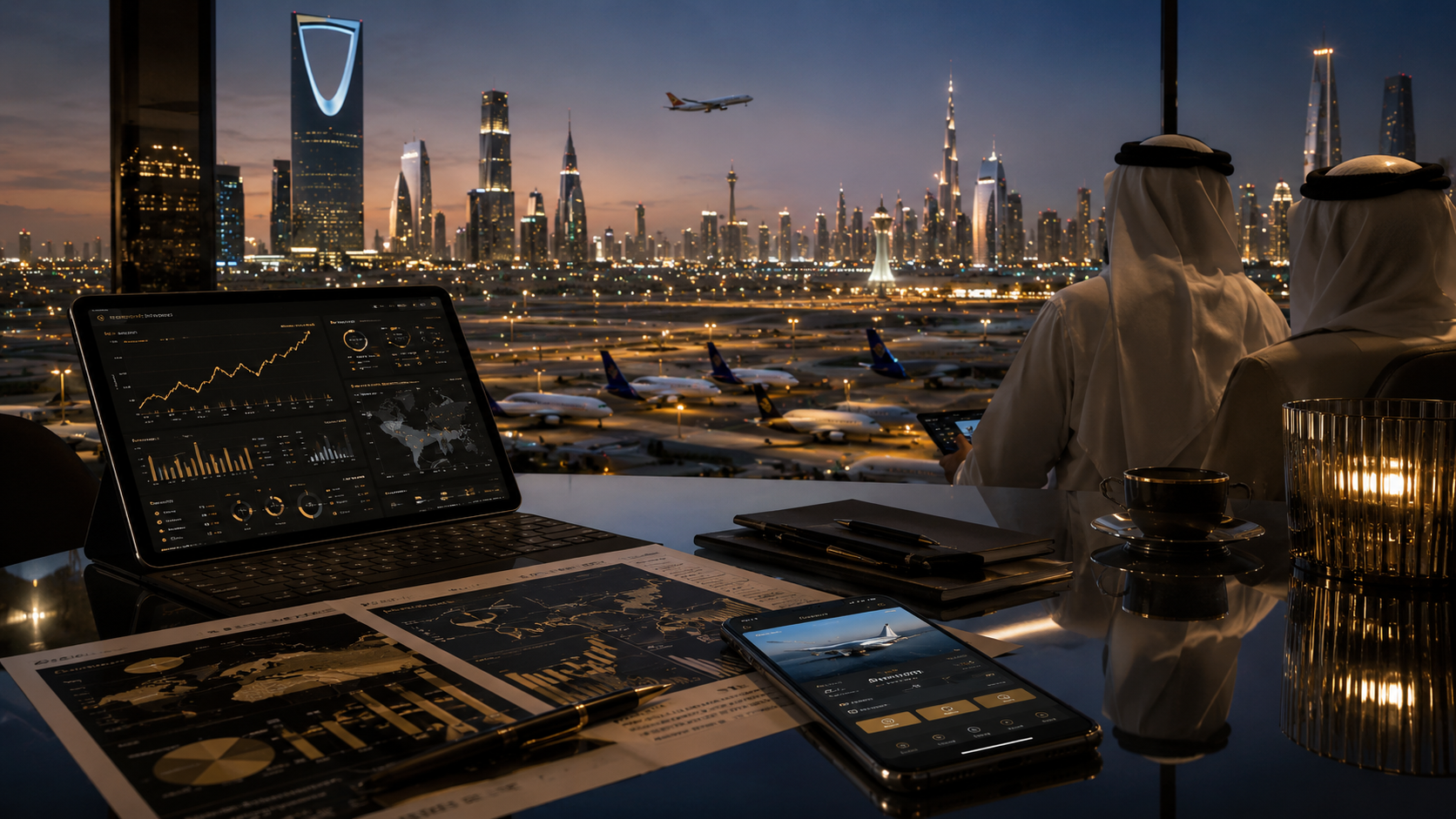
In July 2025, the Middle East and North Africa startup ecosystem recorded an exceptional surge in funding, as 57 startups raised approximately $783 million — a month-on-month increase of 1,411%. Saudi Arabia led with $396.5 million, followed by the UAE at $359 million, meaning the two markets together captured nearly $755 million of total disclosed funding for the month.
These figures do not mean that all of the capital went directly to travel technology companies. What they reveal is a deeper shift: capital in the region is flowing toward the technical infrastructure that will reshape digital commerce, payments, artificial intelligence, platforms, and distribution systems. All of these layers have become foundational to the future of the travel industry across the Gulf.
Competition in Gulf tourism no longer revolves solely around building hotels, expanding airline seat capacity, or opening new destinations. The real competition is now about who owns the digital operating layer through which the entire traveler journey passes — search, pricing, booking, payment, identity, demand management, and loyalty programs.
Capital Shifts from Tourism Assets to Digital Infrastructure
For a long time, tourism investment in the Gulf was measured by mega-projects: airports, hotels, entertainment cities, destinations, and luxury resorts. Today, a new layer of value is growing beneath these assets — travel technology.
This layer encompasses payments companies, booking platforms, hotel management systems, artificial intelligence applications, cloud infrastructure, digital identity solutions, and demand and pricing data providers. Whoever owns this layer may own a substantial share of future profit margins in the travel sector.
The more significant point is that the Gulf is no longer simply a market for consuming global travel solutions. Saudi Arabia and the UAE are evolving into platforms for building local and regional companies capable of serving domestic demand first, then expanding across the Middle East and North Africa.
Why Saudi Arabia and the UAE Lead the Travel Technology Landscape
Saudi Arabia has the scale advantage. Vision 2030 has elevated tourism to a strategic sector, generating substantial demand across accommodation, transportation, entertainment, experiences, Umrah, and domestic tourism. That scale requires local technology platforms capable of managing the complexity.
The UAE has the maturity advantage. Dubai and Abu Dhabi possess world-class infrastructure across aviation, hotels, events, payments, and international connectivity. This makes the UAE an ideal environment for testing travel technology solutions before exporting them to other markets.
When Saudi scale meets UAE maturity, a distinct opportunity emerges: building companies that do not merely sell travel services, but construct the digital infrastructure for travel across the region.
The Real Beneficiary May Not Be a Traditional Travel Company
It would be a mistake to view the funding surge as news relevant only to travel companies. The greatest beneficiaries may be companies operating behind the scenes.
A company providing APIs to connect hotels with booking platforms may gain more than a traditional travel agency. A company building a flexible payments system for travelers may capture more value than a ticket broker. A company managing traveler identity data inside an airport may become more consequential than dozens of consumer-facing applications.
This is where Voyara’s core perspective applies: those who own the infrastructure — not merely the interface — are the ones who will benefit most from the coming wave of Gulf travel technology.
The Risk to Traditional Travel Companies
Traditional companies in Gulf travel may view the current funding wave as a distant event — but they will feel its effects within the coming years.
Every dollar invested in artificial intelligence, digital payments, biometric identity, or distribution systems raises the floor of traveler expectations. A customer who experiences faster booking, easier payment, and sharper personalization will not accept a return to slow models built on phone calls, messaging threads, and legacy interfaces.
This means travel agents, corporate travel management companies, independent hotels, and even some smaller airlines will face mounting pressure to modernize their technical infrastructure or consolidate within larger platforms.
The Real Question: Where Will Capital Go?
The more important question is not: how much has been raised?
The real question is: where will that capital go?
If funding flows toward short-lived consumer applications, the wave will pass. But if it flows toward infrastructure layers, what we are witnessing is a long-term structural shift in the Gulf travel industry.
The region does not simply need new apps for booking hotels and flights. It needs smarter distribution systems, cross-border payment solutions, precise demand data, real-time pricing tools, digital identity layers, and direct integration across tourism, aviation, and hospitality.
The Gulf travel technology funding surge signals that capital is beginning to see this opportunity clearly.
And in travel, as in every digital sector, whoever owns the infrastructure owns the market — before the end user ever sees it.