
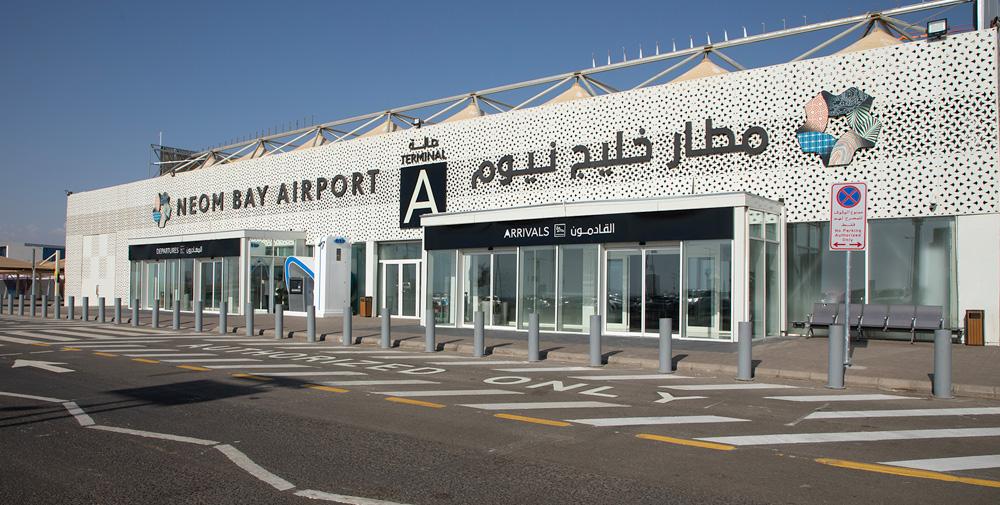
Neom Airport faces an exceptional equation: the lack of an established demand base makes justifying regular commercial routes difficult without government guarantees. Yet a strategic reading frames it as a negotiating tool to secure early placement on carrier networks — even as the operator absorbs an anticipated operational deficit spanning five to ten years.
- Regional carriers will not add Neom to their networks without proven commercial demand volumes or upfront guarantees
- The airport-before-city model has historically produced operational deficits lasting five to ten years before breakeven
- The fundamental distinction is that demand at Neom must be generated, not absorbed — a factor that significantly elevates operational risk
- The nature of initial carrier agreements — government-guaranteed or commercially open — is the most precise indicator of true viability
- Saudi Arabia is introducing substantial new air capacity across multiple projects in close succession, intensifying internal competition for carrier prioritization
Neom Airport faces a fundamental test that extends well beyond infrastructure: can an airport be operationally viable before the city it serves actually exists? That is the core of the debate circulating in aviation sector analysis circles — not an academic question, but a rigorous operational equation with direct implications for decisions made by carriers, investors, and financing entities tied to the project.
Context: An Airport That Precedes Its City
Historically, airports are built to serve existing travel demand or demand with clearly defined growth prospects — whether tourism growth tied to an established destination, commercial growth tied to an economic hub, or logistics growth tied to a distribution center. Neom Airport, however, faces an exceptional situation: the city it is supposed to serve remains under construction, and the permanent population does not yet constitute a demand base capable of sustaining scheduled services at commercially acceptable load factors.
In aviation, airlines require load factors that generally exceed a threshold of 70 to 80 percent for a route to be financially viable on short- and medium-haul operations. In the absence of permanent residents and sustained volumes of business visitors, it is difficult to justify including Neom in a regular commercial network without direct subsidies or government guarantees.
Operational Viability: Numbers Do Not Lie
Assessing the operational viability of any airport depends on three primary axes: actual annual passenger volumes, the mix of domestic and international flights, and the level of aeronautical fees and non-aeronautical revenues from retail, fuel stations, and logistics services. In Neom’s case, the figures across all three axes remain in a grey area — any precise estimate requires verification from direct official sources.
What can be stated with analytical confidence is that new airports in recently developed areas typically pass through an operational bleeding period lasting between five and ten years before reaching financial breakeven — even in cases where a supporting national carrier is present from day one. The question on the table is not whether the airport will achieve profitability over the long term, but who bears the cost of this operational gap during the early years, and under what terms.
Comparison with Analogous Models
There are regional and international precedents worth examining. Marsa Alam Airport in Egypt opened before the area’s tourism market had matured, and suffered a period of low passenger volumes before gradually stabilizing. King Hussein International Airport in Aqaba faced similar difficulties. At the other end of the spectrum, the new Muscat International Airport and Hamad International Airport in Doha were built on top of substantial demand bases and established carrier networks, making their expansions a response to genuine demand rather than a wager on it.
Neom’s situation is fundamentally different from all of these models. The demand is intended to be generated, not absorbed — a distinction that carries significant weight in any assessment of operational risk.
The Negotiating Leverage Argument: A Potential Counter to Classical Viability
A competing reading advanced by some analysts holds that the airport’s primary objective in its first phase may not be financial self-sufficiency at all, but rather the performance of a different strategic role — providing a negotiating argument before major carriers to secure landing and operating rights at an early stage, and establishing Neom’s presence on global aviation network maps before the project is complete.
This approach is well established in Gulf development strategy. Abu Dhabi funded years of Etihad Airways losses in order to build an air connectivity network that elevated the city’s standing as a global hub, before the commercial equation shifted. Saudi Arabia itself is pursuing a similar strategy with its national carriers under Vision 2030, where the aviation map is sometimes treated as a development instrument rather than a purely commercial venture.
Under this reading, Neom Airport becomes an investment in accessibility rather than infrastructure in the classical commercial sense, and the expected return is measured by different metrics than direct revenue yield.
Who Benefits and Who Bears the Risk?
In mapping the interests at stake, Saudi Arabia’s national carriers — Saudia and flynas — emerge as the most probable primary beneficiaries of any exclusive agreements or pre-guaranteed demand volumes, particularly if these are linked to government service contracts for transporting the workforce and personnel involved in building the project — a source of immediate and relatively assured demand regardless of project completion.
Regional carriers such as Emirates, Qatar Airways, flydubai, and Air Arabia, by contrast, will evaluate route viability by strict commercial criteria. Adding Neom to their networks will be contingent on demand volumes that justify allocating an aircraft, crew, and landing fees to a destination that has not yet demonstrated it is a destination. This represents one of the airport’s most significant tests of operational attractiveness in its early phase.
On the risk side, the greatest pressure falls on the operator — whether a direct government entity or a delegated entity — facing high fixed operating costs, including security personnel, firefighting, maintenance, and navigation services, against low variable revenues during the early years. This equation produces an operational deficit that requires continuous external funding from outside the airport itself.
Regional Relevance: What Does This Mean for the Gulf Aviation Landscape?
Neom Airport arrives in the context of a broad structural transformation underway across the Gulf and the Middle East aviation landscape, as countries in the region compete to develop their air infrastructure at a notable pace. Saudi Arabia in particular has announced ambitious airport projects including the new King Salman International Airport in Riyadh, Diriyah Airport, and expansions in Jeddah and Dammam — meaning the Kingdom is injecting substantial new capacity into the aviation sector within a compressed timeframe.
The question sector analysts are raising is whether there is sufficient genuine travel demand to fill all of this new capacity, and what priority carriers will assign to Neom relative to the more mature airports in Riyadh and Jeddah, which represent an established demand base.
Other GCC countries are watching this landscape with considerable interest — not because Neom poses a direct threat to their passenger volume market share, given its geographic distance from the major transit hubs, but because it is testing the limits of the development model built on expanding air infrastructure in new development zones, a model that features in the agenda of every country in the region.
What Executives Should Monitor Going Forward
For executives and investors in the aviation and tourism sectors, there are specific indicators that warrant close monitoring in the period ahead.
First: the nature of the initial operating agreements signed with carriers — are they government service contracts with guaranteed revenues, or open commercial contracts based on demand volumes? This distinction reveals a great deal about the airport’s genuine viability in the eyes of the carriers themselves.
Second: actual load factors on the first commercial flights, as these figures will serve as a real-world indicator of the depth of genuine demand, distinct from projected estimates.
Third: developments in the announced completion schedules for phases one and two of Neom’s integrated projects — particularly the associated cities and resorts — since the airport ultimately reflects the health of the broader development ecosystem rather than a value that exists independently of it.
Fourth: the regulatory framework governing landing fees and ground handling services. Adopting competitive or subsidized fees in the first phase will serve as a carrier attraction tool, but will simultaneously deepen the gap in the airport’s operational budget.
In summary: Neom Airport cannot be evaluated solely by conventional airport analysis tools. It is a compound wager — part investment in the infrastructure that any urban project of this scale requires, and part negotiating instrument to demonstrate seriousness and place Neom on global aviation maps at an early stage. The final arbiter will be time and actual figures, not stated ambitions.