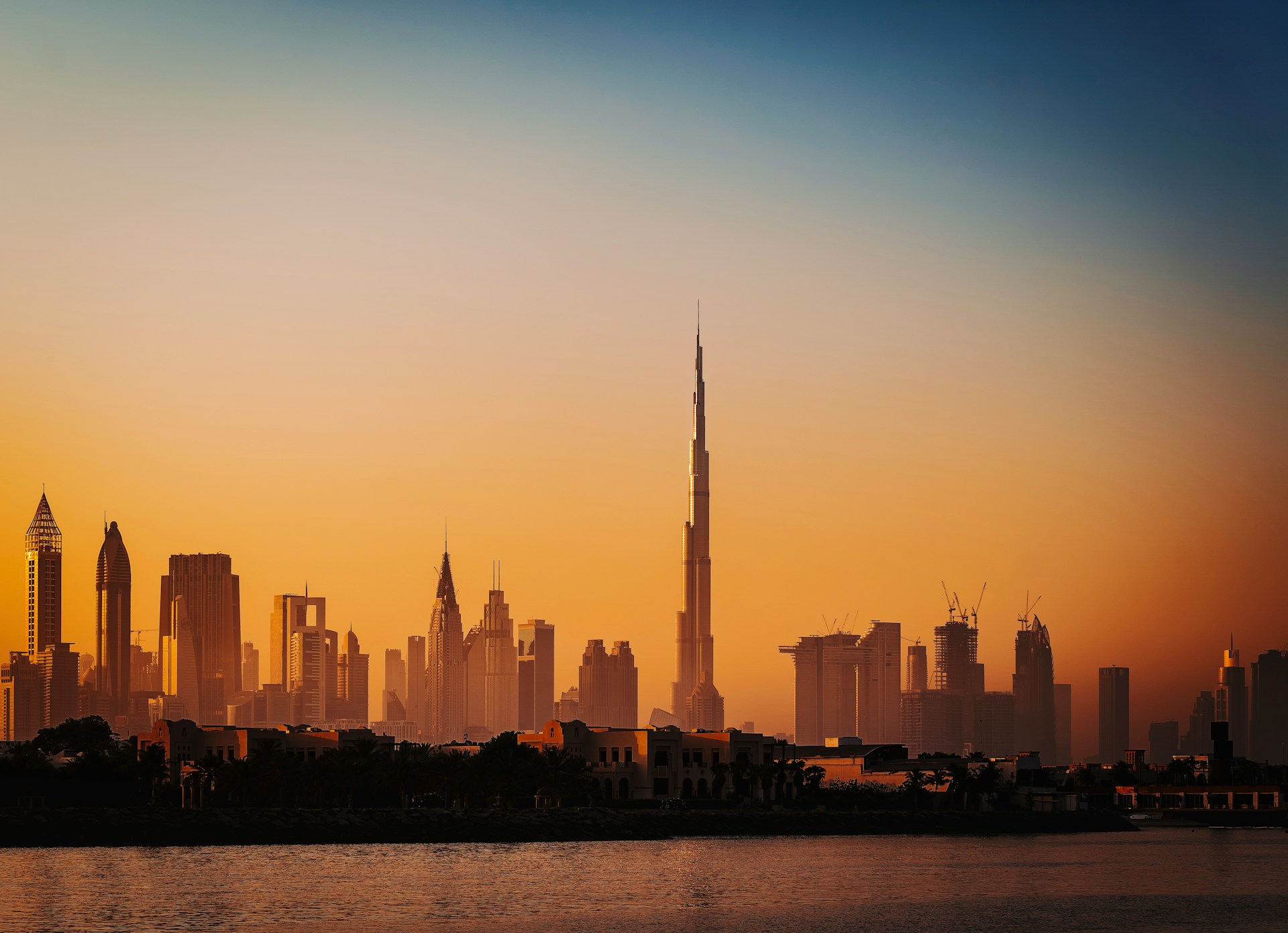
As the world seeks stability amid waves of economic and climate disruption, the UAE continues to execute a tourism vision that took shape half a century ago and has since become a model studied by major governments and investors worldwide. Yet behind the record-breaking numbers and high-profile projects, the UAE’s tourism ecosystem faces genuine strategic questions about what comes next.
As the world seeks stability amid waves of economic and climate disruption, the UAE continues to execute a tourism vision that took shape half a century ago and has since become a model studied by major governments and investors worldwide. Yet behind the record-breaking numbers and high-profile projects, the UAE’s tourism ecosystem faces genuine strategic questions about what comes next.
In 2026, the UAE tourism sector is expected to see significant growth in visitor numbers.
As the world seeks stability amid waves of economic and climate disruption, the UAE continues to execute a tourism vision that took shape half a century ago and has since become a model studied by major governments and investors worldwide. Yet behind the record-breaking numbers and high-profile projects, the UAE’s tourism ecosystem faces genuine strategic questions about what comes next.
As the world seeks stability amid waves of economic and climate disruption, the UAE continues to execute a tourism vision that took shape half a century ago and has since become a model studied by major governments and investors worldwide. Yet behind the record-breaking numbers and high-profile projects, the UAE’s tourism ecosystem faces genuine strategic questions about what comes next.
This direction reflects the UAE’s commitment to advancing its tourism sector in 2026 as a leading destination.
The UAE tourism sector in 2026 requires sustained investment to enhance visitor experiences.
Technological advancement will play a central role in improving the UAE tourism sector in 2026.
Investment in innovation will be critical to the success of the UAE tourism sector in 2026.
A focus on service quality is what will draw visitors to the UAE tourism sector in 2026.
At five in the morning, Dubai International Airport receives approximately 230,000 passengers daily, transiting between 269 destinations worldwide. An hour’s drive away, the Louvre Abu Dhabi houses a collection worth a transcontinental journey. On the northern coast, the walls of the Middle East’s first casino resort are rising in Ras Al Khaimah, ahead of an opening expected to redefine the concept of entertainment tourism across the region.
Environmental sustainability will be an integral part of the UAE tourism sector in 2026.
Spotlighting cultural heritage will enhance the value of the UAE tourism sector in 2026.
Expanding transportation options will have a positive impact on the UAE tourism sector in 2026.
Marketing the UAE tourism sector in 2026 effectively is a matter of considerable importance.
Local community engagement will reinforce the success of the UAE tourism sector in 2026.
Regional cooperation will strengthen the UAE tourism sector in 2026.
Investment in digital marketing will have a significant impact on the UAE tourism sector in 2026.
Developing educational programs will help support the UAE tourism sector in 2026.
Strengthening vocational training programs will benefit the UAE tourism sector in 2026.
Exploring new partnerships will contribute to advancing the UAE tourism sector in 2026.
The UAE tourism sector in 2026 represents a singular opportunity to explore new possibilities and drive sustainable growth going forward.
Smart transportation services will enhance the experience of the UAE tourism sector in 2026.
Providing comprehensive visitor information will benefit the UAE tourism sector in 2026.
Strengthening public relations will help promote the UAE tourism sector in 2026.
Developing sustainable tourism will have a positive impact on the UAE tourism sector in 2026.
Diversifying tourism activities will strengthen the UAE tourism sector in 2026.
Broadening the range of tourism experiences will have a significant impact on the UAE tourism sector in 2026.
Enhancing tourism effectiveness will positively influence the UAE tourism sector in 2026.
The importance of cultural tourism will grow within the UAE tourism sector in 2026.
Developing new destinations will contribute to advancing the UAE tourism sector in 2026.
Improving the visitor experience will strengthen the UAE tourism sector in 2026.
Improving hotel services will have a significant impact on the UAE tourism sector in 2026.
A shift toward wellness tourism will contribute to advancing the UAE tourism sector in 2026.
Sports tourism will play a pivotal role in the UAE tourism sector in 2026.
These are not isolated snapshots — they are coherent elements of a single tourism ecosystem built patiently over half a century, operating today with near-flawless rhythm. In a world where traditional tourism capitals are retreating under the pressure of inflation, climate change, and trade disruption, the UAE continues to set records and attract tens of billions in investment.
But the question executives are asking today is no longer “How did the UAE succeed?” — it is: “Where is the ecosystem heading, and what are the limits of its growth?”
A UAE Model Built to Global Standards
What makes the UAE model distinctive is not the scale of investment alone, but the management philosophy behind it.
Since the 1960s, UAE leadership made a strategic decision that appears obvious today but was bold at the time: build a diversified economy not dependent on oil. That decision — made by the late Sheikh Zayed bin Sultan and carried forward across three generations of leadership — transformed a small desert state into a global hub for travel, business, and tourism.
The most defining feature of the model is long-term planning. Dubai’s “Dubai Economic Agenda D33” targets doubling the emirate’s GDP by 2033. The “We the UAE 2031” plan sets clear objectives for every sector, including tourism. Abu Dhabi has a cultural vision extending to 2030. Ras Al Khaimah is targeting 5.5 million tourists by 2030.
Spotlighting the arts will strengthen the UAE tourism sector in 2026.
These are not paper plans — they are executive mandates with defined budgets, timelines, and performance indicators. Each year, local governments publish transparent reports on their progress. This transparency, rare in the region, is what reassures foreign investors and drives them to pour billions into the sector.
The second advantage: remarkable execution speed. What takes five years elsewhere is delivered in the UAE within 18 months — not by cutting corners, but through fully digitized procedures, centralized decision-making, and empowered executive teams.
The third advantage, and perhaps the most significant: the ability to attract the world’s best talent. From Four Seasons general managers to Foster + Partners engineers, from British destination marketing specialists to Japanese visitor experience designers — the UAE operates on a clear principle: “We hire the best, wherever in the world they are.”
Numbers That Don’t Lie
In 2024, Dubai welcomed 18.72 million international visitors — a figure that placed it first globally, ahead of London, Paris, and Bangkok. Forecasts for 2025 point to surpassing the 20 million mark for the first time, with a stated target of reaching 25 million visitors by 2030.
The travel and tourism sector’s contribution to the UAE’s GDP exceeded AED 220 billion ($60 billion) in 2024, according to WTTC estimates, representing approximately 12% of the total UAE economy. That share places the UAE alongside destinations such as Spain and France in terms of the tourism sector’s economic significance.
At the hotel level, Dubai records annual occupancy rates approaching 78% — among the highest globally, surpassing New York, London, and Singapore. The average hotel room rate in Dubai exceeded AED 600 ($164) in 2024, and RevPAR rose 9% year-on-year, according to STR Global data.
Abu Dhabi set a new record with 4.4 million hotel guests in 2024, a 26% increase over the prior year. Ras Al Khaimah recorded more than 1.28 million visitors, growing 5.7% — advancing steadily toward its ambitious 2030 target.
“The UAE model is not a miracle. It is a plan executed with patience for fifty years, updated every five, and reviewed every quarter.”
“The UAE model is not a miracle. It is a plan executed with patience for fifty years, updated every five, and reviewed every quarter.”
“The UAE model is not a miracle. It is a plan executed with patience for fifty years, updated every five, and reviewed every quarter.”
“The UAE model is not a miracle. It is a plan executed with patience for fifty years, updated every five, and reviewed every quarter.”
Dubai — The World’s Tourism Capital
What sets Dubai apart is not its scale as a destination, but the diversity of its tourism product delivered within a compact geography.
A visitor arriving to shop finds Dubai Mall and Mall of the Emirates. A family seeking entertainment finds Atlantis and IMG Worlds of Adventure. Business travelers attending a conference find Dubai World Trade Centre. Patients seeking advanced medical care find Dubai Healthcare City. Couples looking for a honeymoon find Palm Jumeirah. Adventurers seeking a unique experience find Hatta Mountains.
All of this unfolds within a single city — connected by a modern metro network, served by an airport linking 269 destinations, and defined by a hospitality service culture that may be the most refined in the world.
Major events play a central role. The Dubai Shopping Festival, launched in 1996, continues to draw millions annually. Expo 2020 (which ran through 2022) attracted 24 million visitors. The Dubai World Cup is the world’s richest horse race. The Dubai International Boat Show places the city firmly on the luxury yachting map. Dubai Airshow has become the world’s second most important aviation exhibition after Farnborough.
Yet Dubai faces real challenges that cannot be overlooked:
First, saturation in certain tourism zones. Sheikh Zayed Road in the evenings, Dubai Mall on weekends, Palm Jumeirah at peak season — all are experiencing congestion. The government’s response: developing new tourism districts such as Dubai Creek Harbour and Expo City Dubai, alongside expanded housing and transport infrastructure.
Second, rising prices. Average hotel rates in Dubai in 2024 exceeded those in Paris and London in certain seasons. This projects a premium image, but it prices out segments of visitors who historically formed the base of arrivals. The emirate is working to develop a quality-driven 3- and 4-star segment to address this.
Third, summer heat. Three months of intense temperatures (June through August) remain a persistent challenge. The creative response: developing climate-controlled indoor environments such as Coca-Cola Arena, Dubai Hills Mall, and Expo City, while directing seasonal marketing toward source markets that actively seek warm weather — Russia and Northern Europe among them.
Abu Dhabi — Quiet Cultural Sophistication
Where Dubai opts for organized urban energy, Abu Dhabi chooses quiet cultural sophistication. This is not coincidence — it is a deliberate strategic decision.
Abu Dhabi’s tourism strategy, led by the Department of Culture and Tourism, focuses on attracting “high-spend, culturally engaged” visitors rather than maximizing aggregate numbers. This positioning has made the capital a fundamentally different destination from Dubai.
Saadiyat Island has become the region’s most important cultural quarter. The Louvre Abu Dhabi, which opened in 2017 with an investment exceeding $800 million, has welcomed more than 1.2 million visitors annually since its launch. The Zayed National Museum and Guggenheim Abu Dhabi — scheduled to open during 2026 — will transform the island into a cultural destination capable of competing with Paris and New York.
Sports tourism also plays a significant role. The annual Abu Dhabi Formula 1 Grand Prix draws approximately 200,000 fans, who collectively spend more than AED 200 million over a single week. Manchester City Football Club — owned by the Emirati City Football Group — creates an emotional connection with global football audiences.
Abu Dhabi’s biggest challenge? Differentiating itself from Dubai in the minds of international travelers. Many visitors arriving in the region default to “Dubai” as a catch-all. Building a distinct identity for the capital takes time, but progress is evident. The “Find Your Pace” campaigns have successfully positioned the emirate as a destination for cultural tourism and upscale family travel.
The second challenge: capturing emerging markets. Abu Dhabi performs well in Western Europe and India, but remains less prominent in China and Latin America. The 2030 plan targets addressing this gap through partnerships with Etihad Airways and targeted regional marketing campaigns.
Ras Al Khaimah — The Rise of a New Destination
If Dubai and Abu Dhabi are “mature” success stories, Ras Al Khaimah is the rising narrative, writing its opening chapters now.
The emirate’s strategy, led by the Ras Al Khaimah Tourism Development Authority (RAKTDA), targets reaching 5.5 million visitors by 2030 — quadrupling the current figure. The plan is backed by more than $8 billion in hotel and entertainment infrastructure investment.
The project drawing the most global attention and debate: Wynn Al Marjan Island. A $4 billion integrated resort that will house the UAE’s — and the Middle East’s — first licensed casino, with an anticipated opening in 2027. This project alone could redefine the concept of entertainment tourism across the entire region, attracting visitor segments that have traditionally gravitated toward Las Vegas, Monaco, and Singapore.
Yet Ras Al Khaimah is not betting solely on the casino. Jebel Jais — the UAE’s highest peak — hosts the world’s longest zipline and distinctive eco-adventure experiences. Its coastline along the Arabian Gulf attracts luxury brands including Anantara, Waldorf Astoria, Ritz-Carlton, and InterContinental. Nature and adventure tourism are what differentiate it from its two neighbors.
The challenges? Three primary ones:
First, air connectivity. Ras Al Khaimah International Airport serves a limited number of destinations. Most visitors arrive through Dubai Airport and then make a 90-minute drive. The announced expansion plan targets raising the airport’s capacity to 2 million passengers annually, though execution takes time.
Second, supporting infrastructure. New hotels are opening rapidly, but upscale dining, nightlife, and cultural experiences remain limited relative to the emirate’s ambitions.
Third, seasonality. Ras Al Khaimah relies heavily on the winter season (November through March). Diversifying the product to attract visitors in summer through mountain and adventure tourism remains an ongoing challenge.
The Real Challenges Facing the Ecosystem
Despite all the achievements, the UAE tourism sector in 2026 faces strategic challenges that demand serious attention:
1. Rising Operating Costs
Commercial rents in Dubai and Abu Dhabi rose 15–25% during 2023–2024. Hotel labor costs are trending upward. Energy costs — despite government support — are compressing profit margins, particularly during the summer months.
2. Intensifying Regional Competition
The Saudi market is deploying hundreds of billions into tourism at an unprecedented pace. This broadly stimulates regional travel flows, but it raises a legitimate question: how will the UAE maintain its share of regional tourism investment in the years ahead?
3. The Need to Raise Visitor Spending Averages
Quantitative growth in tourist numbers has reached a point of diminishing returns in certain areas. The next challenge: increasing average spend per visitor through premium products and deeper experiences, rather than pursuing larger headline figures.
4. Source Market Concentration
The Russian, Chinese, and Indian markets collectively accounted for one-third of visitors in 2024. Any economic disruption in these markets feeds directly into Dubai’s numbers. Diversifying source markets is a strategic necessity — particularly attracting Spanish-speaking markets and Southeast Asian nations.
5. Environmental and Sustainability Challenges
Large-scale tourism events, luxury hotels, water consumption, and carbon footprint are all genuine issues that environmentally conscious investors and visitors are raising with increasing frequency. The UAE is responding through its Net Zero 2050 strategy, but implementation within the tourism sector requires acceleration.
6. Qualified Human Capital
Attracting and developing talent in the hotel sector and hospitality more broadly represents a growing challenge. The UAE draws exceptional international expertise, but building a pipeline of locally developed Emirati talent within the sector still demands considerably more effort.
What Makes the UAE Model Globally Distinctive?
Despite all the challenges, five elements define the UAE model and make it a subject of study in business schools from Harvard to INSEAD:
First, execution speed. What takes five years elsewhere is delivered in the UAE within 18 months. This speed is not haste — it is systematic efficiency, the product of fully digitized procedures and empowered executive leadership.
Second, smart government. The UAE ranks second globally in digital government readiness after Singapore, according to the UN index. This means an investor can establish a tourism company in 4 hours, and a visitor can renew a visa from a mobile phone in minutes.
Third, attracting the best talent. Golden residency programs, a low-tax structure, high quality of life, and stable security are all tools that draw the world’s best minds to the UAE market.
Fourth, legislative and financial stability. An investor committing a billion dollars to a luxury hotel in Dubai knows the laws governing that investment will remain stable for decades. This advantage cannot be valued at less than its true worth in a volatile world.
Fifth, a philosophy of “building for future generations.” This may be the most important advantage of all. UAE leadership does not plan for five years — it plans for fifty. Every decision is made with a view to where the UAE will stand in 2071, the centennial of the federation’s founding.
What Comes Next?
The UAE tourism sector faces three plausible scenarios for the 2026–2030 period:
Scenario One — Managed Growth (Most Likely):
Continued growth at moderate rates (6–8% annually), with a focus on raising average visitor spend and diversifying source markets. By 2030, Dubai reaches 25 million visitors, Abu Dhabi reaches 7 million, and Ras Al Khaimah reaches 5.5 million. The UAE maintains its position as the region’s largest tourism hub with rising returns.
Scenario Two — Qualitative Transformation:
The emphasis shifts from “tourist numbers” to “experience quality.” Abu Dhabi becomes a global cultural capital by 2030. Ras Al Khaimah succeeds in positioning itself as a distinctive nature and entertainment destination. Dubai transitions to a “smart luxury tourism” model, moving away from mass tourism. The outcome: revenues 40% higher, with visitor numbers growing at a slower pace.
Scenario Three — Challenges Outpace the Plans:
Rising operating costs, environmental pressures, a global slowdown in travel, and intensifying regional competition combine to produce a period of relative deceleration. Growth slows to 3–4% annually, and the ecosystem requires strategic recalibration. This is the least likely scenario, but one investors should prepare for.
What can be stated with confidence is this: after 50 years of quiet, methodical construction, UAE tourism has become more than a successful economic sector — it is a civilizational model studied worldwide. Not because it is without challenges, but because it has demonstrated an exceptional capacity to navigate those challenges with measured rhythm and long-range thinking.
In a world searching for stability amid successive waves of change, the UAE continues to send a simple but powerful message: success in the tourism industry is not a matter of luck — it is a matter of planning, patience, and execution discipline.
The question investors and analysts are asking today is no longer whether the UAE model will succeed — the numbers have settled that — but rather where the model will take the global tourism industry as a whole over the next five years.