
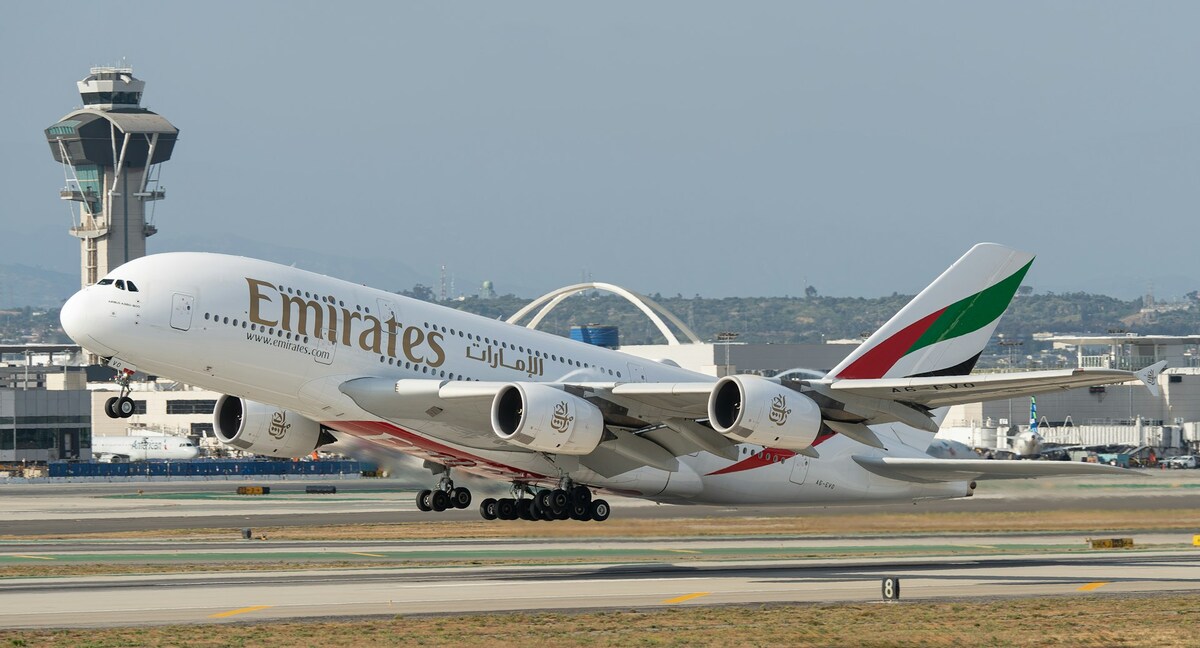
Iran-linked geopolitical tensions sharply reshaped the Gulf travel landscape in 2026: air capacity fell 56%, global traveler confidence declined, and Oxford Economics projects regional tourism losses of up to $56 billion if the crisis persists.
- Air capacity among Middle East carriers dropped more than 56% during the first weeks of the military escalation
- The greater impact is psychological, not operational: the global traveler reduces the region to a single news headline regardless of borders
- Oxford Economics projects a decline in international visitors of between 11% and 27%, with potential tourism losses of $56 billion
- Major Gulf carriers face simultaneous pressure on fuel costs, profitability, and brand perception
- Advance booking lead times have shortened in favor of last-minute reservations, undermining companies' forecasting ability
As the region prepared for an exceptional summer season backed by a rebound in global demand, geopolitical tensions imposed a new reality on the Gulf travel sector in 2026. Airlines are recalculating, travelers have grown more cautious, and Gulf destinations face a genuine test of their standing as the world’s most stable travel hubs. The Gulf travel sector in 2026 demands collective action to sustain its growth trajectory.
At the start of 2026, the prevailing mood within the Gulf travel industry was altogether different.
Hotels in Dubai, Riyadh, and Doha were projecting record summers. Gulf carriers had raised operational capacity in preparation for a strong season, while the region continued to consolidate its position as a global hub connecting Asia, Europe, and Africa.
As 2026 approaches, the Gulf travel sector is expected to see further innovations that contribute to strengthening tourism across the region.
All stakeholders in the Gulf travel sector in 2026 must work to reinforce traveler confidence.
In the months ahead, defining new strategies for the Gulf travel sector in 2026 will also be essential.
The new challenges facing the Gulf travel sector in 2026 require international cooperation to strengthen air traffic flows.
We must all understand the dynamics surrounding the Gulf travel sector in 2026 to ensure sustainable growth.
The Gulf travel sector in 2026 represents a significant challenge for all industry stakeholders.
It will be important to prepare thoroughly for the variables that may affect the Gulf travel sector in 2026.
The Gulf travel sector in 2026 is expected to present new investment opportunities in tourism services.
Governments across the region are working to upgrade infrastructure in support of the Gulf travel sector in 2026.
Technological innovation is a key driver in the development of the Gulf travel sector in 2026.
International partnerships contribute to strengthening the effectiveness of the Gulf travel sector in 2026.
Within just a few weeks, however, the landscape had shifted entirely.
Projections indicate that the Gulf travel sector in 2026 will see a gradual recovery following current tensions.
Cooperation among airlines is considered a fundamental component of the Gulf travel sector’s success in 2026.
Targeted marketing is part of the strategy to advance the Gulf travel sector in 2026.
Success in the Gulf travel sector in 2026 depends on innovation and adaptation to shifting variables.
Robust contingency planning will be essential to protect the Gulf travel sector in 2026.
The Iran-linked conflict has not only affected politics and energy — it has begun casting a direct shadow over the tourism and aviation sector, one of the industries most sensitive to geopolitical stability.
A unified effort is required to preserve stability in the Gulf travel sector in 2026.
And while Gulf cities continue to operate at near-full capacity, the real question today is no longer “Are the airports functioning?” — it has become: “How is the global traveler now thinking about the region?”
The Gulf — The World’s Aviation Hub That Cannot Afford Disruption
Understanding the impact of any regional tension on the Gulf requires grasping a fundamental reality:
The Gulf is no longer merely a regional travel market — it has become one of the world’s most critical aviation hubs.
Airports such as Dubai, Doha, and Abu Dhabi have transformed over the past decade into primary transit nodes through which millions of flights pass between East and West. Any disruption in the region reverberates immediately across global aviation networks — not only within Middle East travel.
According to Cirium data, airline capacity in the Middle East fell by more than 56% during the first weeks of the military escalation — a figure that exposes the region’s acute operational sensitivity to any geopolitical crisis.
As certain airspaces were closed or restricted, many carriers were forced to reroute flights, resulting in:
- Longer flight times
- Higher fuel consumption
- Rising operating costs
- Greater pressure on summer schedules
In an industry that depends on precision timing and razor-thin operational margins, a few additional hours per flight can translate into millions of dollars in costs across a single summer season.
The Real Crisis Is Not in the Aircraft — It Is in Traveler Confidence
Traveler experience is a core pillar in the development of the Gulf travel sector heading into 2026.
Strengthening traveler confidence is part of the Gulf travel sector’s strategy for 2026.
All stakeholders must prepare for the challenges facing the Gulf travel sector in 2026.
Despite extensive discussion of flight cancellations and rerouting, many travel sector executives believe the greatest impact so far is psychological rather than operational.
The Gulf spent years successfully positioning itself as the “safe zone” within the Middle East.
Dubai in particular built a global image that fused luxury, stability, and accessibility — an image that allowed it to surpass many European and Asian cities in international visitor numbers.
But wars affect more than territory — they affect perception.
European and Asian travelers do not always distinguish between individual countries within the region. Geography is frequently reduced to a single headline: “Tension in the Middle East.”
That is where the problem begins.
A report from Oxford Economics projected that international visitor arrivals to the Middle East could decline by between 11% and 27% through 2026 if the crisis persists, with potential losses reaching $56 billion in regional tourism spending.
“The greatest threat to Gulf tourism is not airspace closures — it is the erosion of confidence among the global traveler.”
This specific point explains why some markets are already registering a shift in booking behavior, with reservations being made closer to the travel date rather than through the advance planning that previously characterized the market.
European carrier easyJet has already flagged a decline in summer bookings compared to the prior year, citing anxiety linked to the conflict and rising fuel prices.
Gulf Airlines Face the Test of Resilience
If any entity is capable of absorbing shocks in the region, it is the Gulf carriers.
Emirates, Qatar Airways, and Etihad Airways have spent the past two decades building highly resilient operational models, backed by modern fleets, strong liquidity, and deep experience in crisis management.
The COVID-19 pandemic alone reshaped the sector globally, yet the Gulf carriers emerged from it faster than many of their competitors.
Today, these carriers face a different challenge:
maintaining market confidence while continuing to operate in a complex geopolitical environment.
The challenge extends beyond routes alone, encompassing:
- Fuel cost management
- Sustaining profitability
- Protecting brand image
- Avoiding disruption to summer schedules
- Adapting to shifting demand patterns
And while some global carriers have begun trimming their outlooks or flagging pressure on bookings, the Gulf carriers continue to handle the situation with a notably quieter tone than their European and American counterparts.
That restraint is not incidental — it is part of a broader strategy to protect the region’s image as a stable destination regardless of circumstances.
Are Gulf Destinations Beginning to Lose Momentum?
For now, there is no basis for speaking of a tourism “collapse” in the Gulf — but it is clear the market has entered a period of caution.
Saudi Arabia, which is making a strong bet on tourism as part of Vision 2030, continues to invest in mega-projects and international events.
The UAE, for its part, maintains strong momentum across hospitality, aviation, and retail.
Yet the sector faces a difficult equation:
how to sustain the attraction of global visitors amid a tense regional environment.
Notably, some destinations have begun to benefit indirectly from the crisis.
Turkey, for example, has seen an increase in international transit traffic following the rerouting of some air flows away from certain Gulf hubs, according to Financial Times reports.
In response, the Gulf states are working to preserve their core advantage:
superior infrastructure.
The region today commands:
- Some of the world’s best airports
- The largest long-haul carriers
- Substantial investment in hospitality
- High operational flexibility
- Considerable marketing capacity
These are factors that position the market to recover quickly once conditions stabilize.
The Gulf Tourism Economy at a Moment of Redefinition
The 2026 crisis may be exposing a critical point:
Gulf tourism has become a component of the region’s economic security — not merely a leisure sector.
The UAE, Saudi Arabia, and Qatar have invested billions of dollars to transform tourism into a genuine economic pillar beyond oil, which means any prolonged disruption could prompt governments and carriers alike to reconsider:
- Diversifying tourist source markets
- Reducing dependence on transit traffic
- Strengthening domestic and regional tourism
- Expanding crisis management strategies
- Developing more resilient operating models
At the same time, the crisis may push the region to accelerate its investments in technology, smart tourism, and data analytics — particularly as traveler behavior continues to shift globally in the wake of successive disruptions over recent years.
What Comes Next?
For now, the Gulf does not appear to have lost its standing as a tourism and aviation hub — but it is navigating a critical test that could reshape how the entire sector operates.
If the crisis resolves quickly, the region will likely recover its momentum with speed, supported by its robust infrastructure and the confidence it has built over recent years.
If tensions persist, however, we may witness a deeper shift in the global travel map — with changes to transit hubs, booking patterns, and traveler preferences.
What is certain is that the summer of 2026 will be no ordinary tourism season in the Gulf…
It will be a defining moment — one that determines how the region navigates a world in which geopolitics has become a permanent variable in the travel and tourism equation.