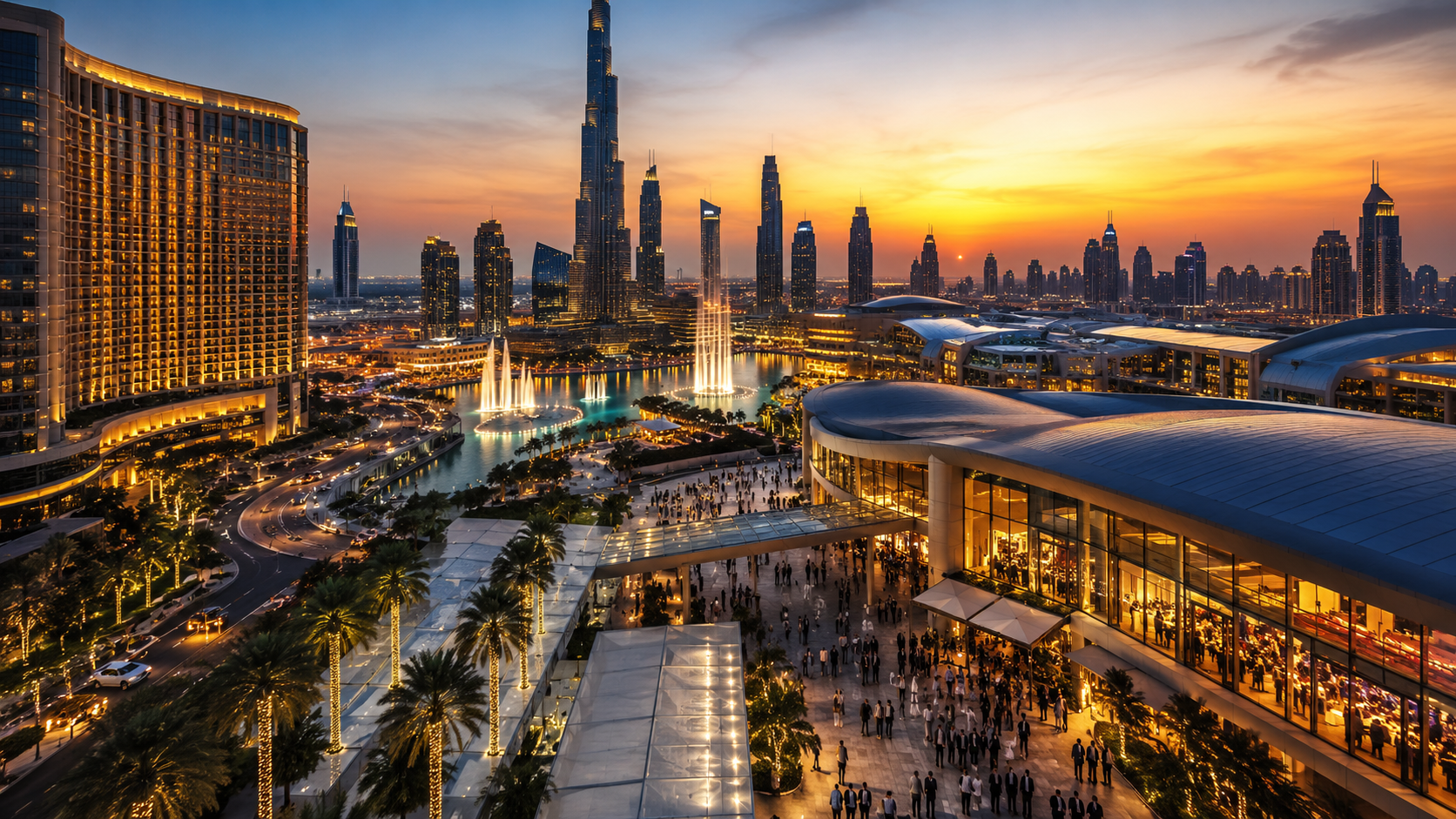
As the Middle East travel industry confronts one of its most uncertain periods in years, Dubai is doubling down on its events and entertainment agenda ahead of summer 2026 — a deliberate effort to sustain sector momentum and support demand in the months ahead.
The move comes after widespread aviation and travel disruptions across the region in the first quarter of the year, prompting many destinations to reassess their marketing and operational strategies ahead of the summer season.
Despite those headwinds, Dubai enters this period from a position of strength. The emirate received 19.59 million international visitors in 2025 — a record high — while the hotel sector posted record occupancy, RevPAR, and ADR, reinforcing the city’s standing as one of the world’s most active tourism destinations.
The start of 2026, however, brought a different reality. After a strong January, regional aviation disruptions began weighing on inbound travel across the region, affecting the performance of numerous tourism markets through March — particularly those heavily dependent on international visitor flows.
Against that backdrop, Dubai is leaning on one of its most consequential assets, built up over the past several years: events.
From international exhibitions and conferences to esports, entertainment festivals, and seasonal programming, events have gradually shifted from a marketing tool to a direct economic driver — one that supports hotel occupancy, aviation traffic, and tourism spending.
Observers argue that Dubai’s success over the past decade has not rested on leisure tourism alone, but on its ability to generate sustained demand through a near-year-round events calendar — an approach that has allowed hotels to maintain elevated rate levels even during periods of seasonal or economic softness.
The emirate is also working to broaden its target visitor base, with a sharper focus on domestic and regional demand alongside attracting new traveler segments seeking short- and medium-haul experiences over the summer months.
That strategic orientation carries added weight in the context of intensifying competition among regional destinations for visitors and tourism spend — particularly as large-scale investments continue in Saudi Arabia, Qatar, and Ras Al Khaimah, with each market actively working to expand its share of regional and international travel flows.
The central question facing the sector today is not whether Dubai can attract visitors, but whether it can sustain the revenue and profitability levels it achieved in recent years. While some of the softness in international demand can be offset by domestic and regional markets, preserving hotel rates and operational returns remains the real challenge for operators in the months ahead.
Experts suggest that Dubai’s ability to navigate this period without triggering a broad wave of rate discounting will serve as a meaningful indicator of the market’s maturity and the underlying strength of demand for the destination — particularly as the emirate continues to invest in infrastructure, events, and new tourism experiences.
Ultimately, the real test this summer may not be the volume of events Dubai hosts, but whether those events can demonstrate that the emirate’s tourism sector has become more resilient — and better equipped to absorb shocks — than in previous cycles.