
Middle East Travel Intelligence — Extended Analysis
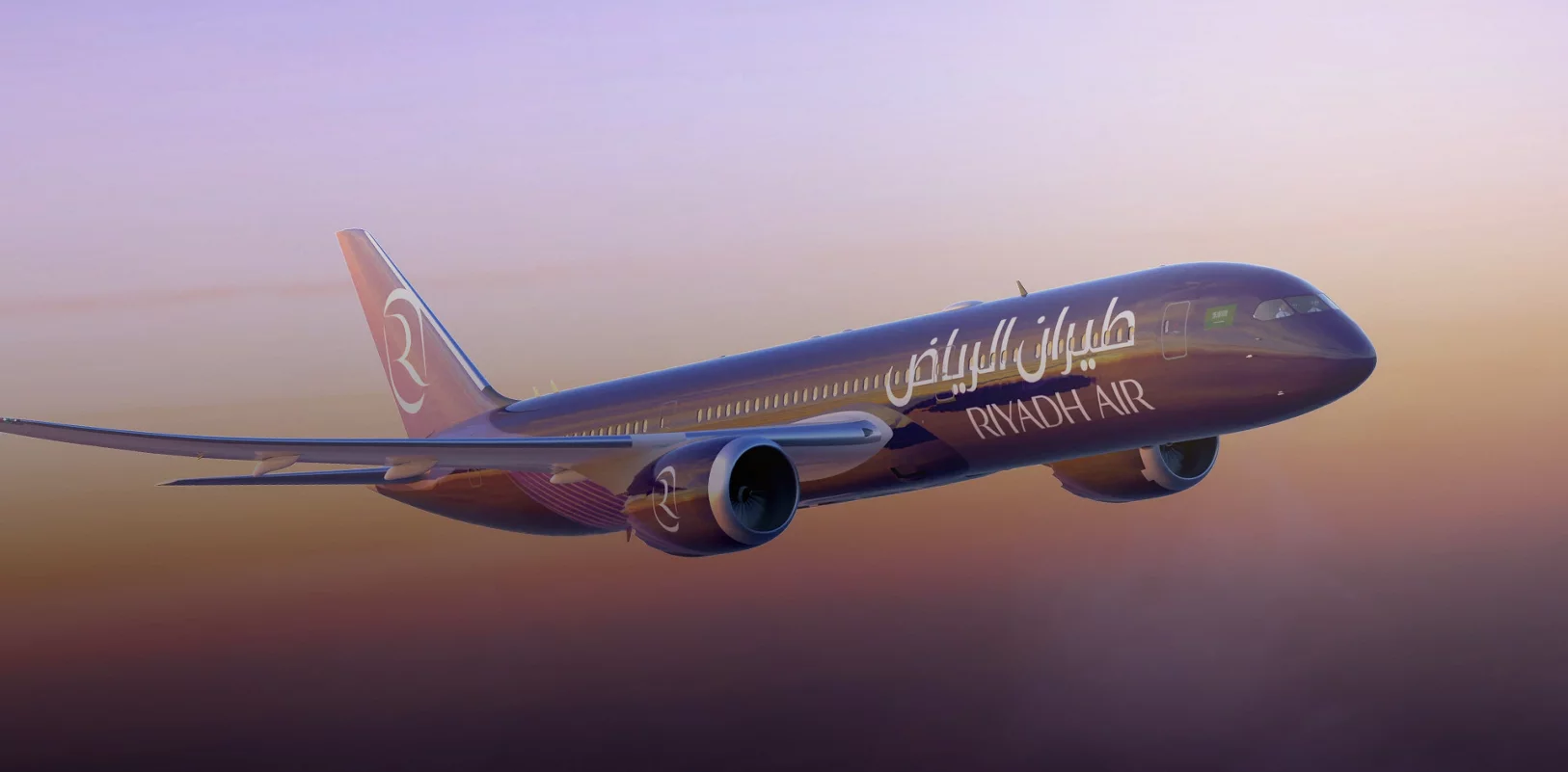
On June 10, 2026, more than a flight departed Riyadh for London. One of the region’s most ambitious economic bets took off with it — a venture measured not by seats sold, but by Saudi Arabia’s position on the global aviation map for the full decade ahead. That this happened at the worst moment for regional aviation is not coincidence. It is the core of the story.
When Riyadh Air’s inaugural flight departed King Khalid International Airport bound for London Heathrow, the Kingdom was signaling the transition of one of Vision 2030’s pillars from promise to operation. The decision worth examining is that the airline moved its launch date forward by three weeks — from July 1 to June 10 — citing accelerated delivery of Boeing 787-9 Dreamliner aircraft. The first two aircraft arrived on June 5; a third followed two days later.
What makes this launch a strategic event rather than an operational one is the context surrounding it. The young carrier enters the market at the most punishing moment for regional aviation in years. IATA projects the Middle East will record a net loss of $4.3 billion in 2026 — the only region globally in the red — driven by airspace disruption, flight cancellations, and elevated fuel costs in the wake of the Iran war. At the precise moment when everyone else is cutting, Riyadh is choosing to expand. This report attempts to deconstruct the logic behind that decision and to assess its prospects and risks.
I: The Project Was Not Born Today — It Reaches Completion Today
To understand the scale of the bet, one must return to March 2023, when Crown Prince Mohammed bin Salman, in his capacity as chairman of the Public Investment Fund’s board, announced the carrier’s launch. From that moment, Riyadh Air was never simply a corporate venture — it was a component of the National Transport and Logistics Strategy. Full ownership by the Public Investment Fund, with PIF Governor Yasir Al-Rumayyan chairing the board, places the carrier in the category of state instruments rather than market enterprises.
The figures announced since the carrier’s founding reveal the ambition: an expected contribution of $20 billion to non-oil GDP, the creation of more than 200,000 direct and indirect jobs, a fleet exceeding 180 aircraft at its furthest horizon beginning with an order for 72 Boeing 787-9s, and a target of connecting Riyadh to more than 100 destinations by 2030. What occurred in June 2026 is not a start from nothing — it is the moment three years of quiet construction reached completion: incorporation, aircraft contracting, identity and talent development, and then departure.
II: Why a Counter-Cycle Launch Is a Calculated Decision, Not a Gamble
In strategic theory, expanding when competitors contract — what is known as a counter-cyclical move — ranks among the most difficult and bold decisions available to any organization. A Saudi official described the launch timing explicitly as seizing an opportunity, a characterization that reveals three core advantages.
The first is that the cost of building market share falls during a downturn. When established carriers reduce capacity and defer expansion, capturing a slice of the market becomes cheaper and meets less resistance. The second is that Riyadh Air, carrying no operational legacy, bears no burden of aging fleet or existing network to defend. It launches with the newest and most fuel-efficient aircraft available — an advantage compounded when average jet fuel prices sit at $152 per barrel. The third, and deepest, advantage is that the bet is a long-term sovereign one: a fund of the Public Investment Fund’s scale does not measure success by next quarter’s profit, but by Riyadh’s position on the map in 2034 and 2050.
Editorial objectivity, however, requires acknowledging the other side of the picture. Launching amid turbulent conditions means initial occupancy rates will inevitably be affected, that building awareness for a new brand will face an anxious travel environment, and that competition for transit traffic will be fierce against carriers with networks and loyalty accumulated over decades. Counter-cyclical moves are a double-edged weapon: they lower the cost of entry, but raise the difficulty of gaining altitude.
What makes this bet viable in the first place is the nature of the capital behind it. The head of the aviation sector at the Public Investment Fund described aviation as “highly contributory” to growth, generating a multiplier effect on GDP that can reach as high as four times. This logic — the logic of the economic multiplier rather than direct profit — explains the Fund’s willingness to absorb years of foundational losses: the sought return is not the carrier’s earnings alone, but the tourism, logistics, jobs, and investment it catalyzes around the airport and the city. This is the fundamental difference between patient sovereign capital and capital seeking a quarterly return.
Part Three: The Man Leading the Bet
The project cannot be read in isolation from its leader. Tony Douglas, the CEO, previously led Etihad Airways in Abu Dhabi — the man credited with steering that carrier toward profitability after years of losses. Recruiting from within the competing Gulf ecosystem is no incidental detail; it is a deliberate move to bring in expertise that built a Gulf hub model and knows its strengths and weaknesses from the inside.
The lesson Douglas carries from his Etihad experience runs deeper than operational know-how. He lived from within the core dilemma of the Gulf hub model built on “Sixth Freedom” rights — the carriage of passengers between two foreign countries via an intermediate stop. That model generates substantial volume, but operates on thin margins and is acutely sensitive to price and competition, because the transit passenger does not intend the stopover as a destination but merely passes through it. More critically, Douglas knows where Abu Dhabi fell short: it wagered on transit without a sufficient origin-and-destination market to underpin it, leaving it perpetually captive to a thin margin.
Douglas has not concealed the scale of the ambition. He announced at the inauguration ceremony that the airline intends to connect Riyadh to 22 destinations within the next nine months alone — a strikingly bold target for a carrier still taking delivery of its first aircraft. This accelerated pace reflects the nature of the project: it was not designed to be a small boutique carrier feeling its way forward, but a national instrument moving at the speed of a state rather than with the caution of a startup.
This is where Riyadh Air holds its most important structural advantage over Abu Dhabi: Riyadh is not merely a transit hub, but a genuine origin-and-destination market. It is the capital of the largest economy in the Gulf, with a population expected to reach 15–20 million by 2030, and a base of business travel, Hajj, Umrah, and inbound tourism. This “authentic” demand — traffic that seeks out Riyadh as a destination rather than passing through it — gives the carrier a cushion that Etihad never had, and reduces its dependence on thin-margin transit alone. In short, Douglas is attempting to build a hybrid model: transit traffic layered over a solid foundation of domestic demand.
Part Four: The Real Equation Is Not the Aircraft — It’s the Airport
The most common misreading of Riyadh Air is to confine it to the fleet. The carrier is only half of the equation; the other half is King Salman International Airport, currently under construction to become one of the largest airports in the world. The plan targets a capacity of approximately 120 million passengers by 2030, rising to 185 million over the longer term, across 57 square kilometers and six parallel runways. Riyadh Air is slated to use it as the primary base for its direct routes to Europe, Asia, and the Americas.
This is the point many analyses miss: the hub model succeeds not on aircraft alone, but on infrastructure capable of processing massive transit volumes with efficiency. The Emirates built its preeminence on Dubai airport; Qatar Airways built its on Hamad International. Riyadh recognizes that competing with these two hubs demands an airport of equivalent scale — or larger. King Salman International Airport is the structural answer to that equation, not aircraft alone. The two projects — the carrier and the airport — are designed to take off together.
The blueprint extends well beyond runways and terminals. The vision centers on a fully integrated aerotropolis encompassing hotels, commercial and logistics space, and ground transportation services. The first new terminal, with a capacity of 40 million passengers, is expected to begin operations by 2029, paving the way for a gradual replacement of the existing King Khalid International Airport. The infrastructure is therefore not merely a gateway for the carrier — it is an economic engine in its own right. That explains why the project’s success is measured by its impact on the surrounding economy, not by carrier traffic alone.
Fifth: What Drives Demand? A Complete Ecosystem, Not Individual Flights
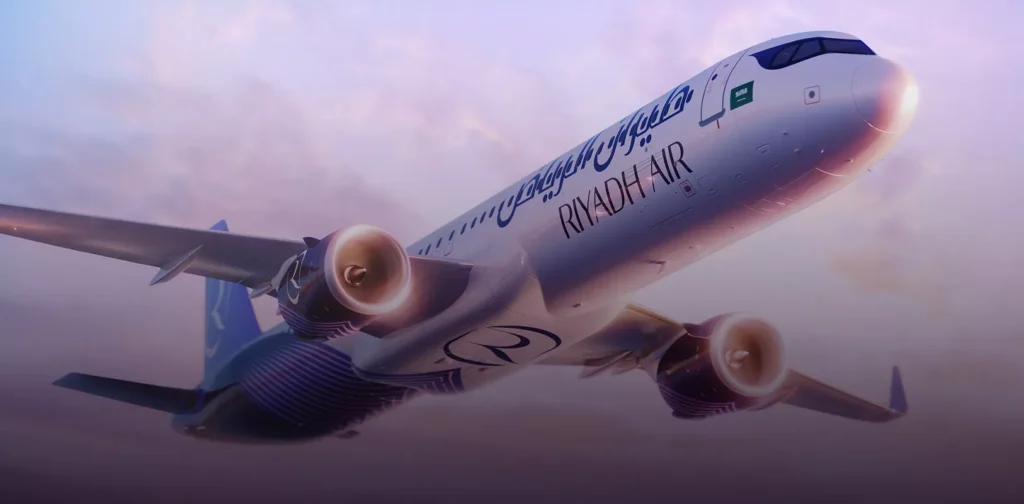
A successful carrier requires sustained demand, and Riyadh is building that demand on three concurrent pillars. The first is inbound tourism: the Kingdom’s target of 150 million visitors by 2030 is a figure impossible to achieve without the seat capacity to connect Saudi Arabia to the world. The second is marquee events: Expo 2030 in Riyadh and the 2034 FIFA World Cup represent guaranteed demand catalysts that will deliver millions of visitors within defined windows — giving both the carrier and the airport an existential rationale that admits no delay. The third is domestic and intra-regional demand: a demographically large Saudi market, combined with a near-constant flow of Umrah and Hajj traffic, provides a resilient passenger base that underpins the international network.
This integration is what sets the Saudi bet apart from a simple airline launch. Riyadh Air is not a standalone venture — it is a node in a wider ecosystem: a mega-airport, tourism targets, global events, and deep domestic demand. When these elements converge, the risk of “an airline flying with empty seats” becomes considerably lower than it appears from the outside.
Sixth: Redrawing the Gulf’s Skies
The broader implication of this launch falls on the structure of regional competition. For decades, the Gulf’s skies rested on the Emirates–Qatar Airways duopoly, later broadening to include Etihad. Riyadh Air’s entry, backed by sovereign weight, transforms the landscape into a four-way dynamic and gradually shifts a portion of the transit center of gravity toward the heart of the Arabian Peninsula — leveraging Riyadh’s position at the intersection of Asia, Africa, and Europe.
For Dubai, Doha, and Abu Dhabi, the new competitor poses no short-term threat to their preeminence, but it does impose a different equation: Gulf transit traffic is no longer a pie divided among three carriers, but four — and every new share is carved, in part, from what already exists. More critically, Riyadh Air targets the commercial core of the competing hub model: transit between Europe and Asia. This is not competition at the margins — it is competition at the core.
Even so, the regional market remains in structural long-term expansion — one that may well accommodate all players. The question is not “who exits?” but “how is the coming growth redistributed?” — and that distinction is fundamental to reading the landscape clearly.
Seventh: Risks and Scenarios
No analysis is complete without an honest accounting of the risks. The first is operational: building a reliable network, trained personnel, a safety culture, and on-time performance takes years, and the accelerated ambition — 22 destinations in nine months — places enormous pressure on a system still taking shape. The second is timing: ongoing disruption across regional airspace delays the development of reliable transit traffic, which is the core of the hub model. The third is competition: established carriers will not stand aside; they will defend their market share through pricing, network depth, and loyalty.
Against this backdrop, three scenarios emerge. In the base scenario, the carrier builds its network incrementally as the security environment improves, capturing a meaningful share of the regional growth ahead — driven by Expo 2030 and the 2034 World Cup. In the optimistic scenario, de-escalation and aircraft deliveries accelerate in tandem, and the carrier leverages its first-mover position to capture a larger share than pre-crisis projections suggested. In the conservative scenario, expansion stalls due to continued disruption or infrastructure delays, slowing hub development without halting it entirely — because sovereign backing gives the project a tolerance for difficult years that conventional carriers cannot sustain.
Conclusion
Riyadh Air’s launch at the height of the worst regional aviation crisis in recent memory is not recklessness — it is a precise expression of the difference between market logic and state logic. The market sees $4.3 billion in losses and contracts; the state sees that same contraction as an opening and expands. And because this project is not a standalone carrier but an integrated system — a massive airport, tourism targets, global events, and deep domestic demand — its prospects for success are higher than the current moment suggests.
For any decision-maker, three indicators merit close monitoring in the months ahead: the pace of aircraft deliveries against the ambitious expansion schedule; load factor trajectories on initial routes amid a volatile operating environment; and the carrier’s ability to secure genuine transit share rather than point-to-point traffic alone. If all three materialize, Riyadh will not simply have launched an airline — it will have purchased a permanent position on the global connectivity map, paying the price of launching into the storm in order to arrive first when it clears.
Sources: Saudi Press Agency (SPA) · Arab News · Gulf News · Gulf Business · Aviation Week · AeroRoutes · King Salman International Airport official website (KSIA) · International Air Transport Association (IATA) · statements by CEO Tony Douglas and PIF Governor Yasir Al-Rumayyan, June 2026.