
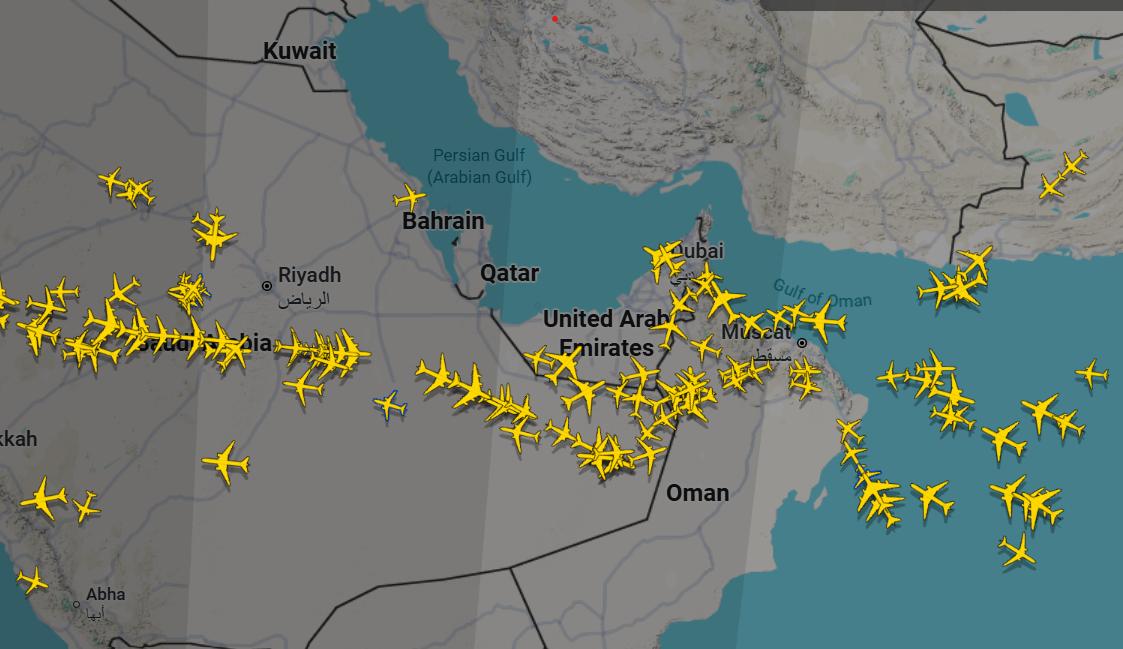
Price wars in Gulf aviation are restructuring the sector as low-cost carriers pressure the margins of full-service airlines across three levels: declining yield per seat kilometer, rising structural costs, and erosion of the economy-class passenger base — threatening load factors and the viability of operating models.
- Low-cost carriers are now competing for passenger segments once exclusive to full-service airlines, weakening yield per seat kilometer.
- Mid-size regional carriers are the most vulnerable: they lack the cost efficiency of low-cost operators and the network strength of the majors.
- Implicit government backing gives the large Gulf carriers greater capacity to absorb margin pressure compared to private-sector competitors.
- Critical friction routes: the Gulf and the Indian Subcontinent, North Africa, and intra-Gulf capital connections.
- Investors in aviation sukuk and mid-tenor asset finance instruments face rising credit risk as profitability declines.
Price wars in Gulf skies have become one of the most consequential structural variables that chief financial officers and aviation sector investors can no longer afford to ignore. Since low-cost carriers began consolidating their presence on routes that were historically the exclusive domain of major national carriers, the issue has moved well beyond transient price competition — it has become a deep restructuring of how value is created across the sector. The central question occupying investors today is not whether the major carriers will be affected, but rather: how far can their margins erode before they are compelled to overhaul their entire business model?
Market Structure: How Did We Get Here?
Understanding the current landscape requires situating it within the structural context that produced it. The Gulf region’s exceptional geographic position — as a natural transit point between East and West — granted major carriers such as Emirates, Etihad, and Qatar Airways a competitive advantage that was difficult to displace for many years. Yet that advantage was never fully insulated. As aviation liberalization advanced gradually across multiple countries, and as middle-class traveler volumes from South Asia, Africa, and Southeast Asia increased alongside growing two-way labor migration flows, demand for low-cost flights proved deeper and more durable than previously estimated.
Within this context, low-cost carriers began establishing operational bases across the region — through organic expansion and strategic partnerships alike. What distinguishes this phase from earlier ones is that these carriers are no longer confined to targeting the most price-sensitive travelers. They are now competing for passenger segments that major carriers had long classified as their stable base.
The Impact on Margins: Numbers Worth Scrutinizing
Pressure on profit margins is materializing across three interconnected levels. At the first level, a race to the bottom is underway on pricing for certain short- and medium-haul regional routes, where major carriers find themselves forced to either cede market share or reduce fares — and therefore weaken their revenue per available seat kilometer, the standard metric analysts monitor closely to assess carrier health.
At the second level, the structural costs of major carriers continue to rise, driven by more diverse fleets, higher crew expenses, and heavier service infrastructure. This cost structure disparity grants low-cost carriers greater pricing flexibility — allowing them to defend or reduce their fares without eroding margins at the same rate major carriers suffer.
The third level carries the most significant medium-term implications: the erosion of the economy-class passenger base on major carrier flights, which weighs directly on load factors — the cornerstone of financial equilibrium in these carriers’ operating models. When a load factor slips below a certain threshold — which varies across carriers depending on their cost structure — a given flight shifts from a profit contributor to an operational burden on the financial statements.
Who Actually Benefits in This Equation?
The clearest and most direct beneficiary is the individual traveler, who now has broader choices at lower prices. From an investment standpoint, however, low-cost carriers that succeed in controlling their cost structure and achieving high load factors on Gulf routes stand to generate comparatively attractive returns under current demand dynamics. Airport operators, ground services companies, and logistics providers also benefit — generating volume-based revenues tied to flight and passenger counts rather than carrier type.
At a broader level, economies whose tourism strategies target large volumes of budget travelers gain as well: activating low-cost aviation increases accessibility to these destinations without requiring governments to absorb direct subsidy costs.
Those Exposed to Risk: Not Only the Major Carriers
The picture of potential losers is more complex than it appears on the surface. While major carriers are the most visible in the frame, the risk extends to other layers. Mid-sized regional carriers operating short- and medium-haul routes within the Gulf and neighboring countries find themselves in the most difficult position: they lack the cost efficiency of low-cost carriers and the brand power or network breadth of the major carriers. They may well prove the most exposed to margin pressure in the near term.
Investors in aviation sukuk and financing instruments tied to mid-sized aviation assets are also in a risk zone — declining profitability affects carriers’ creditworthiness, and by extension the value of these instruments and their recovery rates in the event of default.
Regional Specificity: The Gulf Market’s Distinct Character
These dynamics cannot be analyzed in isolation from the Gulf market’s particular characteristics. Unlike European and North American markets, where low-cost carriers have a long history of maturity and stability, the regional market remains in a state of transition. This transitional phase creates tensions whose full trajectory is difficult to predict.
On one hand, the major Gulf carriers maintain an exceptional presence that extends well beyond the commercial dimension — they are typically tied to broader national and developmental agendas that make expansion or contraction decisions subject to considerations beyond immediate profitability. This implicit backing grants them the capacity to absorb margin pressure phases for longer periods than a privately owned competitor might withstand.
On the other hand, the region’s demographic composition — specifically the large mass of expatriate labor moving between the Gulf and labor-exporting countries — constitutes the demographic fuel on which low-cost carriers run. Looking ahead, this structural demand is expected to remain in place regardless of short-term economic fluctuations.
Critical Routes: Where Is Friction Most Intense?
The sharpest competition is concentrated on specific routes: medium-haul routes between the Gulf and the Indian subcontinent, North Africa routes, and routes connecting Gulf capitals to one another. These routes combine high demand density with elevated price sensitivity — making them natural friction zones between carriers from both categories.
Implications for Investor Decision-Making
This landscape raises a set of questions that investors must confront directly when assessing their exposure to the regional aviation sector. First: do the current price-to-earnings ratios of major carriers reflect the structural shift in the competitive landscape, or are they still built on assumptions from a prior era? Second: how resilient are these carriers’ revenue models when price pressure persists across full cycles rather than isolated financial quarters?
For institutional investors holding positions in major carriers, the indicators warranting close monitoring include: the trajectory of revenue per available seat kilometer relative to cost per available seat kilometer, and the extent to which these carriers can defend business class and first-class price premiums as a final redoubt of profitability. Investors seeking direct exposure to low-cost aviation sector growth, for their part, face their own risks — centered on market depth and these carriers’ ability to sustain their lean operating model in an environment where fuel, labor, and maintenance costs have risen.
Available Opportunities Amid the Pressure
Margin pressure does not mean an absence of opportunity. Several plausible scenarios merit tracking. Major carriers that succeed in building hybrid cost structures — combining the flexibility of the low-cost model with network strength and brand equity — may emerge from this phase in a stronger competitive position than when they entered it. Equally, declining valuations among some mid-sized carriers may create acquisition or merger opportunities that redraw the region’s operational map in a more concentrated and efficient configuration.
Major carriers may also find in air cargo and ancillary services a revenue support mechanism during periods of passenger fare pressure — particularly given that the Gulf occupies a pivotal position within global supply chains.
What Should Executives Monitor Next?
In the near term, three areas warrant close attention. First, gate allocation decisions at major regional airports — slot assignments and available times constitute a genuine operational constraint on low-cost expansion and an early indicator of regulatory authorities’ direction. Second, the capacity levels announced by low-cost carriers on Gulf routes for the coming months — excessive capacity additions typically precede an aggressive competitive pricing wave. Third, how major carriers communicate their strategies for managing price pressures to shareholders in quarterly meetings — candid statements on this front reveal the depth of the impact on business models more than aggregated figures alone can.
Ultimately, this is not a picture of absolute winners and absolute losers. It is a picture of structural rebalancing — one in which each carrier’s ability to manage its cost structure and build genuine loyalty among its most profitable passenger segments will determine whether it holds or retreats on the new competitive map of Gulf skies.